
What Are Tree Root Barriers?

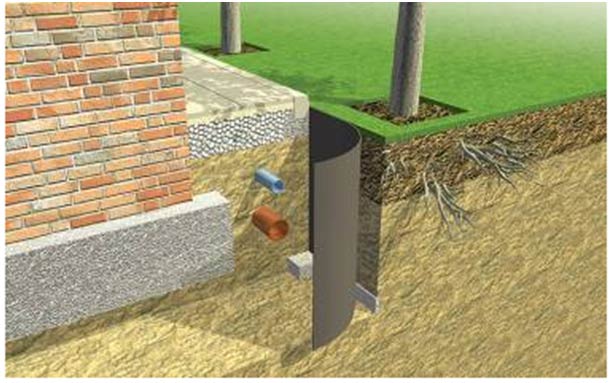
Vertical Root Barriers
Vertical root barrier application as supplied by GreenBlue Urban

Tree Root Barriers - Why Are They Important?

Root barriers can help protect a tree from invasive roots. They also prevent excess moisture. They can also help prevent structural damage caused by offending roots. Root barriers can be either linear or surround the tree. They are most effective when installed when a new tree is planted. This way, the new tree’s roots can grow in the direction they’re meant to.

Root Barriers prevent invasive roots

One of the best ways to protect your landscaping from invasive roots is tree root barrier installation. These barriers are often made of a fabric or metal mesh material that prevents tree roots from growing through them. They allow water to pass through, but prevent large roots from causing damage. Some barriers are even made of a chemical that inhibits root growth for years.

Tree roots can do considerable damage to your house if left unchecked. They can reach plumbing, foundations, and landscaping. Whether your trees are ornamental or a hazard, you should make sure they’re planted at least ten feet away from your home’s foundation.

Installing tree root barrier to protect driveway from root damage

Prevent excessive moisture

Installing a plastic membrane vertical root barrier is a simple way to prevent tree roots from accessing your building’s foundation. They are made of heavy-duty plastic sheeting that prevents roots from growing through it. In addition to preventing moisture loss from the ground, a root barrier membrane can also stabilize reactive clay beneath your foundation. They are easy to install, and you can install them up to 18 inches below grade. However, you should make sure you leave a three-inch space between the root ball and the barrier.

There are several different types of barriers available. The simplest type is the pre-manufactured barrier, which is the least expensive type. This type of barrier is made from heavy-duty polypropylene and is between forty and sixty mil thick. The thick material is strong and impenetrable, and helps prevent excessive moisture from reaching the tree’s roots.

They nourish the rest of the tree while it heals

Tree roots rely on a symbiotic relationship with soil microbes to survive. These microbes create white fungal threads called mycelium that spread out on top of the tree roots and absorb sugars from them. This in turn provides the tree with important minerals. This relationship is known as a mycorrhizal network.

Tree roots perform several essential functions for the tree, such as anchoring the tree in the soil and collecting water and nutrients. They also sense where the water and nutrients are, and move toward those sources. Trees also have a vascular structure, which allows them to draw water and nutrients up from the ground.

They prevent structural damage from offending roots

Tree root barriers are an effective way to prevent structural damage caused by offending tree roots. They work best for new tree plantings because existing roots will not need to be pruned. However, if the structure of the tree is already mature, root pruning may be necessary. However, cutting the roots too close to the tree’s trunk could compromise the tree’s stability. It may also result in sparse foliage and eventually death.
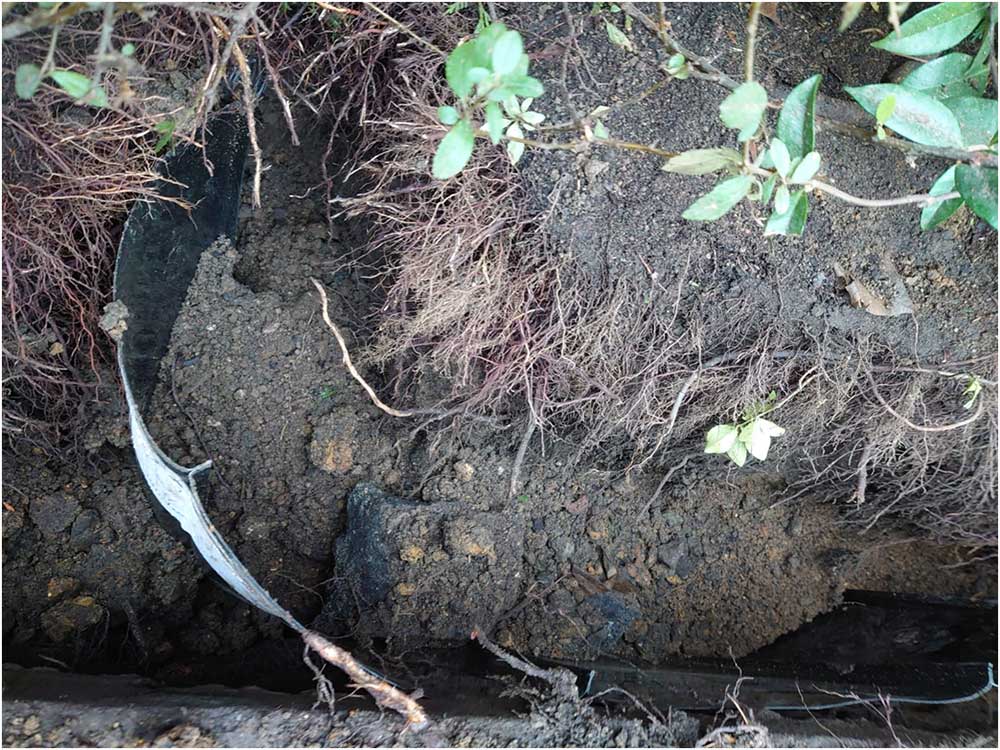
vertical tree root barriers
Installation of a vertical tree root barrier to protect a building’s foundations

Root barriers come in several different varieties. The simplest type is a permeable mesh screen that lets water and small roots pass through while keeping larger roots out. A thicker root barrier extends up to 36 inches below the surface of the soil. Various studies have been conducted on the effectiveness of these barriers in preventing structural damage. One study conducted in the Netherlands compared sixteen different root barrier treatments. The results of this study were encouraging – in each case, the roots eventually managed to evade the barrier and return to the surface of the soil.

They prevent invasive roots from growing over the barrier

Root barriers for mature trees are a good way to control the growth of invasive tree roots. These roots can be a serious nuisance as they can damage critical structures and cause expensive and time-consuming repairs. These barriers are made of a high-density, flexible membrane that forms an impenetrable barrier around tree roots. It prevents excess moisture from escaping and keeps roots from spreading. They are an easy and affordable solution to root problems.

Tree root barriers are not only beneficial for the aesthetic appearance of your property, but also provide valuable protection for the environment. For example, invasive tree roots can damage sidewalks and concrete, creating liability and tripping hazards. A root barrier will prevent such damages by preventing invasive roots from affecting nearby trees, shrubs and plants.

FAQ's on tree root barriers

Tree root barriers are typically installed during the planting process or when a tree is young and its roots are still small. However, they can also be installed later in the tree’s life if root encroachment is causing problems.

Tree root barriers can potentially harm trees if they are installed improperly or if they restrict root growth too much. It is important to follow proper installation techniques and to choose a barrier that is appropriate for the tree species and soil conditions.

Root barriers are used to prevent the roots of trees from growing into an area that could cause them to damage infrastructure. Typically, we install root barriers around driveways, drainage systems or the foundations of houses. The root barriers we use are made in the UK from recycled Plastic fishing nets and are a permanent solution.

The depth of tree root barriers can vary depending on the size and species of the tree, as well as the specific situation and reason for installing the barrier. However, as a general guideline, root barriers should be installed at a depth of at least 24 to 36 inches (61 to 91 centimeters) below the soil surface. This is deep enough to prevent most tree roots from growing under or through the barrier.

For larger trees or in situations where root growth is a significant concern, the barrier may need to be installed at a greater depth. It is important to consult with a qualified arborist or tree care professional to determine the appropriate depth for a specific situation.

In addition to depth, the width of the barrier is also important to consider. The barrier should extend at least 2 to 3 feet (0.6 to 0.9 meters) beyond the drip line of the tree (the area directly below the outermost branches), and may need to be wider for larger trees. This ensures that all major roots are contained within the designated area.

Share:

Facebook
Twitter
Pinterest
LinkedIn
Print
Email

Related Posts

Scroll to Top